MANUFACTURING
What Luxury Brands Should Look for in an OEM Jewellery Manufacturer
BANGKOK — 16 JUNE 2026
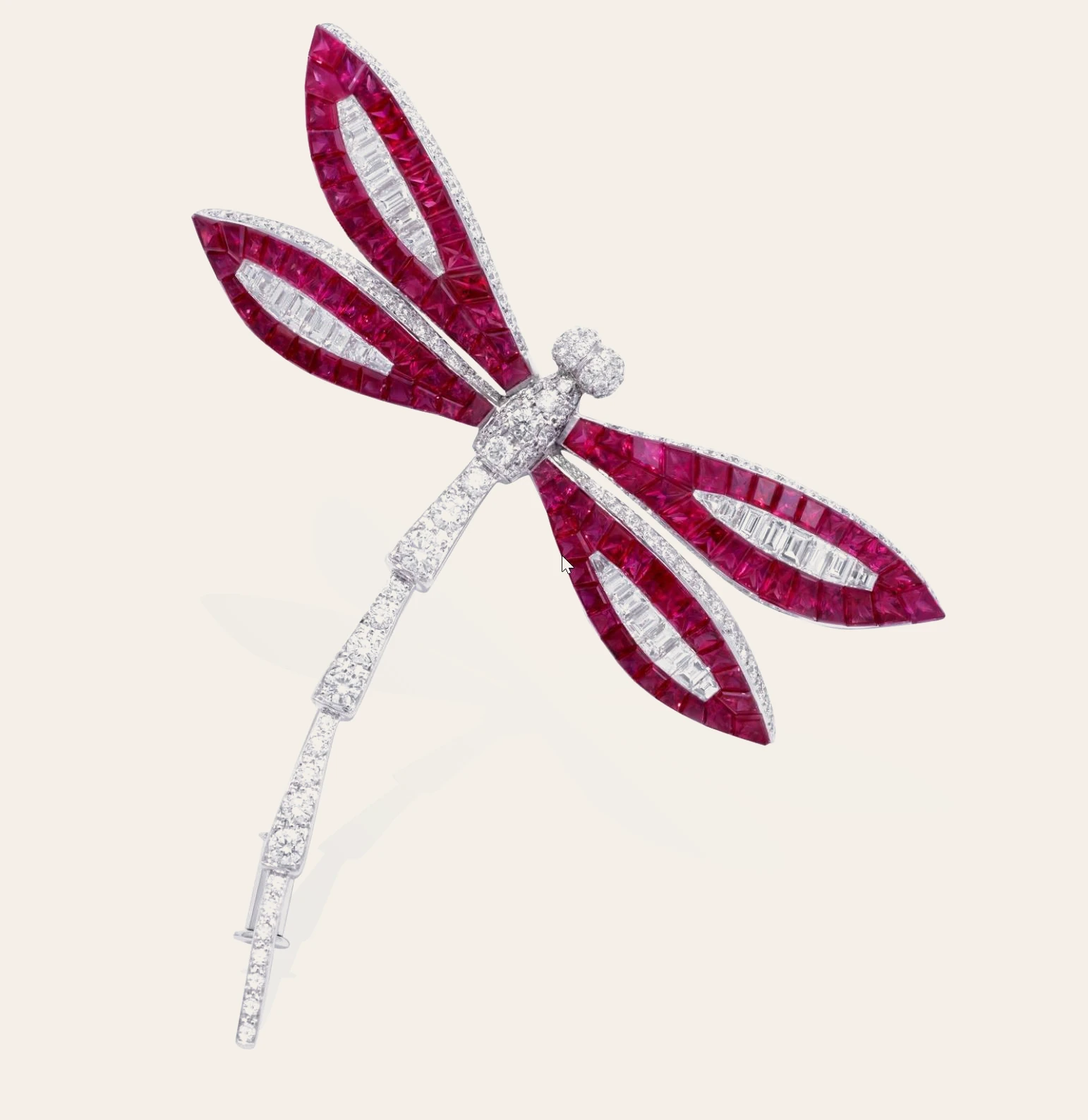
Most writing about jewellery manufacturing describes how a piece is made. This one is about something earlier and, for a brand, far more consequential: how to choose the people who will make it.
For a luxury house, the manufacturing partner is one of the few decisions that touches everything at once — quality, margin, confidentiality, reputation and the freedom to design without fear. Choose well and the partnership becomes invisible, in the best sense. Choose poorly and every weakness eventually reaches the client.
So before the first sketch is ever shared, a brand should know what it is genuinely looking for. In my experience, it comes down to a handful of things, and almost none of them are about geography.
Beyond Geography: Excellence Is Not Confined to a Map
For many years, fine jewellery has been tied to a small number of traditional centres. Those places earned their reputation, and rightly so. But artistry and technical mastery were never the private property of two or three countries.
The history of jewellery is far wider than that. Human beings have shaped gold and precious stones across cultures for thousands of years, and great craftsmanship has always travelled with knowledge, materials and the patience of skilled hands.
A brand should therefore look past inherited assumptions and ask sharper questions. Can this partner interpret a design faithfully? Can they engineer it without dulling its beauty? Can they protect what is confidential? Can they deliver the same standard twice?
Those questions reveal far more than a country of origin ever could.
Why Bangkok Earns a Serious Look
I work in Bangkok, so I am not a neutral observer. But the figures are not mine, and they tend to surprise people who still imagine this trade as a purely European affair.
Thailand is the world’s third-largest exporter of coloured gemstones and the second-largest exporter of corundum — the family that includes ruby and sapphire. By industry estimates, more than eighty percent of the world’s coloured stones pass through Thai hands at some stage of cutting, treatment or trade. Gems and jewellery rank among the country’s leading export categories and support close to a million people across the supply chain.
Those numbers matter because high jewellery needs more than labour. It needs a whole ecosystem within arm’s reach — goldsmiths, setters, polishers, lapidarists, diamond cutters, CAD specialists who can walk to one another’s benches. Reputation opens a conversation. An ecosystem like this is what finishes it.
Control: The Quiet Advantage of Doing It Under One Roof
If I had to name the single most important thing a brand should look for, it would be control — and not for the reasons people expect.
The question is not which machines a workshop owns. That is a specification sheet, and specification sheets are easy. The real question is quieter: when a problem appears, who is accountable, and how quickly can it be solved?
When casting, cutting, setting and quality control sit in separate buildings owned by separate companies, a fault surfaces late and responsibility dissolves between them. When they sit under one roof, a half-millimetre adjustment is a short conversation between colleagues rather than a renegotiation between vendors. A stone can be cut for the design instead of the design being bent to fit the stone.
I won’t repeat the full production journey here — I’ve described that elsewhere, in The Long Road to Excellence. The point for a brand choosing a partner is simpler: integration is not a luxury of convenience. It is how confidentiality, speed and quality stay in the same pair of hands.
The Partner Who Stays Invisible
This is the part brands most often underestimate, and it is the part that defines a true OEM relationship.
A manufacturing partner sees everything. The unreleased design. The mechanism that took years to solve. The margins. The collection that has not been announced. For a luxury brand, a design is never just a drawing — it is intellectual property, commercial strategy and future identity, handed to someone outside the building.
So the test of an OEM manufacturer is not only what they can make. It is what they will never say.
The best partners do not use a client’s work to promote themselves. They do not let the line between maker and brand blur. They stay behind the scenes by choice, protecting the client’s identity, design language and market position as carefully as they protect the stones. Discretion, in this trade, is not a courtesy added at the end. It is part of the craftsmanship.
Responsible Sourcing Is Now Part of Quality
Responsibility used to sit beside quality. It is now inside it.
The shift is measurable. In 2025, around 78 per cent of buyers in key markets said ethical sourcing influenced their jewellery purchases, compared with barely half five years earlier. The great houses have answered: maisons such as Cartier, Boucheron and Tiffany now publish provenance and traceability that would have been unthinkable a generation ago.
A partner therefore has to be able to stand inside that expectation rather than flinch from it, traceable materials, vetted suppliers, recycled metals where appropriate, and policies that survive an audit. For our part, Amanda is a member of the Watch & Jewellery Initiative 2030, it is also audited under the Responsible Jewellery Council. Our lapidary undergoes regular, rigorous audits by independent auditors reporting to jewellery houses and watch brands. We hold to the European Nickel Directive and cadmium-free regulations, because skin-safe metal is a baseline, not a selling point.
For a modern brand, a responsible supply chain does not dilute the story of a piece. It is part of why the piece is worth telling.
A Supplier Fills an Order. A Partner Protects an Intention.
The cheapest quote and the right partner are rarely the same company.
A supplier executes what is on the order. A partner asks whether the order will achieve what the brand actually wants — and says so before production begins, not after. That distinction shows up in two ordinary situations that every brand eventually faces.
The first is the repeatable collection. A single showpiece tests skill; a collection tests discipline, because the fortieth piece must match the first. The second is the difficult conversation — the moment a partner has to advise against a detail, or suggest a better one, without ever taking the design away from the brand. A good partner can do both. A mere supplier can do neither.
What Luxury Brands Should Ask
Before committing, a brand should be able to answer yes to most of these:
- •Do they understand our design language, not just our drawings?
- •Can they advise us technically without taking over creatively?
- •Are the critical stages — cutting, setting, quality control — genuinely in-house?
- •Can they solve problems before production begins, not after?
- •Will they protect our confidentiality as instinctively as their own?
- •Can they support responsible, traceable sourcing under real scrutiny?
- •Can they hold the standard across a full collection, not only a showpiece?
- •Could this become a partnership measured in years rather than orders?
The answers reveal far more than any country of origin.
The Right Partner Protects the Brand
A luxury jewellery brand is built over years, sometimes generations. Every piece that reaches a client either strengthens or weakens that reputation.
That is why this choice matters so much. The best partner is not the one who simply offers production. It is the one who protects the brand’s intention through every stage of making, and who is content to remain unnamed while doing it.
So brands should not ask only where their jewellery is made. They should ask how it is made, who is making it, how deeply they understand the craft — and whether they can be trusted with the standard the brand has promised its clients.
Because geography may open the conversation.
But craftsmanship, discretion and trust decide the result.
Planning a fine or high jewellery project? Amanda Jewellery works with brands seeking confidential OEM manufacturing, technical development and responsible production in Bangkok.
Book a Consultation →
Adam Komarnicki
Manufacturing & Development, Amanda Jewellery
Driven by a lifelong passion for fine and high jewellery, Adam leads manufacturing development at Amanda with a focus on responsible sourcing, thoughtful design and technical excellence.
More from the Blog
Begin a Partnership
Ready to Build Something Exceptional?
We build long-term manufacturing partnerships with brands that value precision, confidentiality, and responsible production.
Based in Bangkok, Thailand. Serving brands globally.